In 1934, two brothers actually did find a buried treasure of strange old foreign coins buried near Bathurst.
Leonard Steever worked as the keeper of the Carron Point Lighthouse. Considering it was the height of the Great Depression and 40% of New Brunswickers were unemployed, he was already lucky to have a job.
On July 11th, though, Leonard Steever became even luckier … or so it seemed.
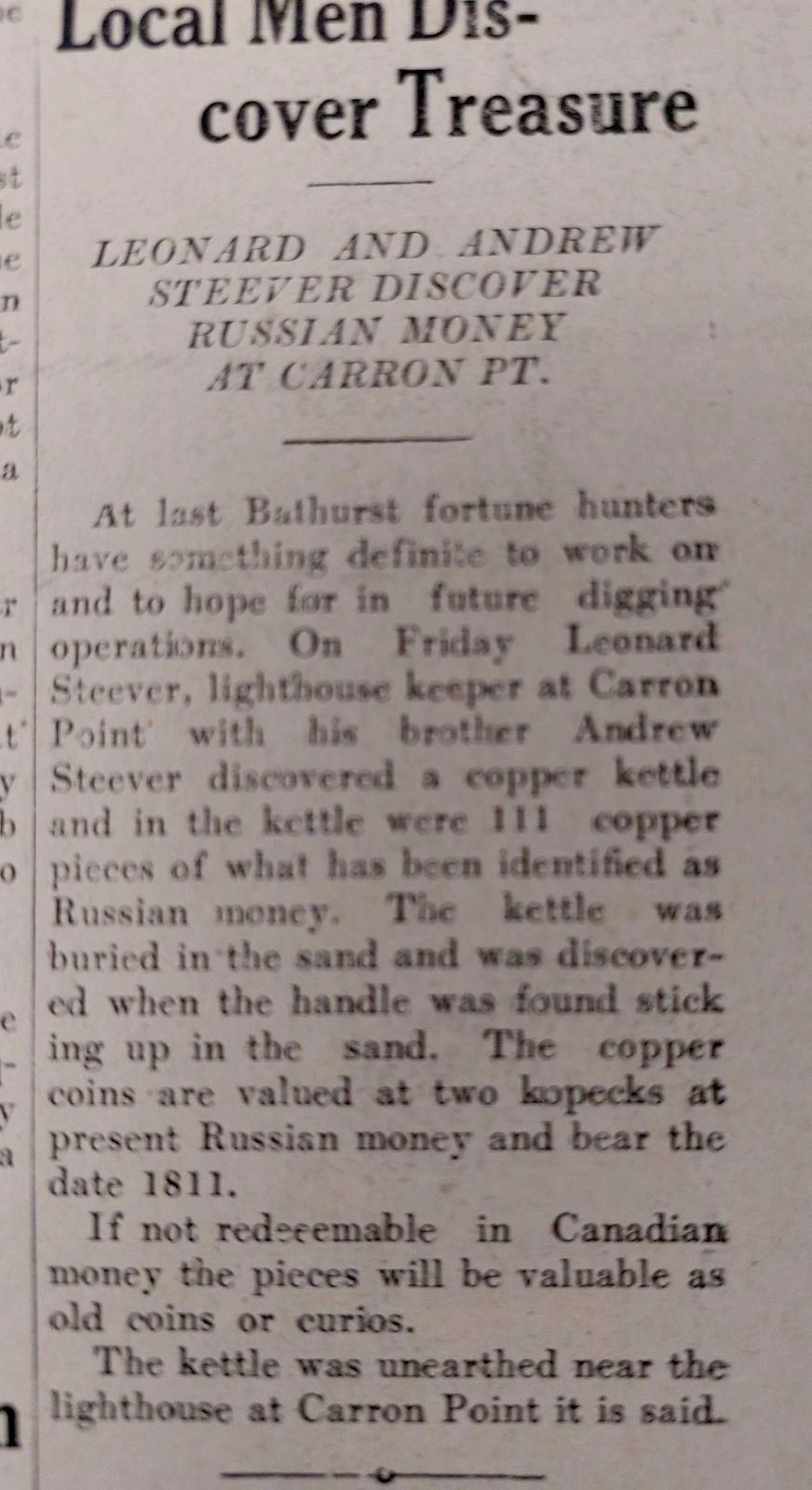
The Gloucester Northern Light Newspaper wrote: “At last Bathurst fortune hunters have something definite to work on and to hope for in future digging operations. On Friday, Leonard Steever, lighthouse keeper at Carron Point with his brother Andrew Steever discovered a copper kettle and in the kettle were 111 copper pieces … The kettle was buried in the sand and was discovered when the handle was found sticking up in the sand. The kettle was unearthed near the lighthouse at Carron Point it is said.”
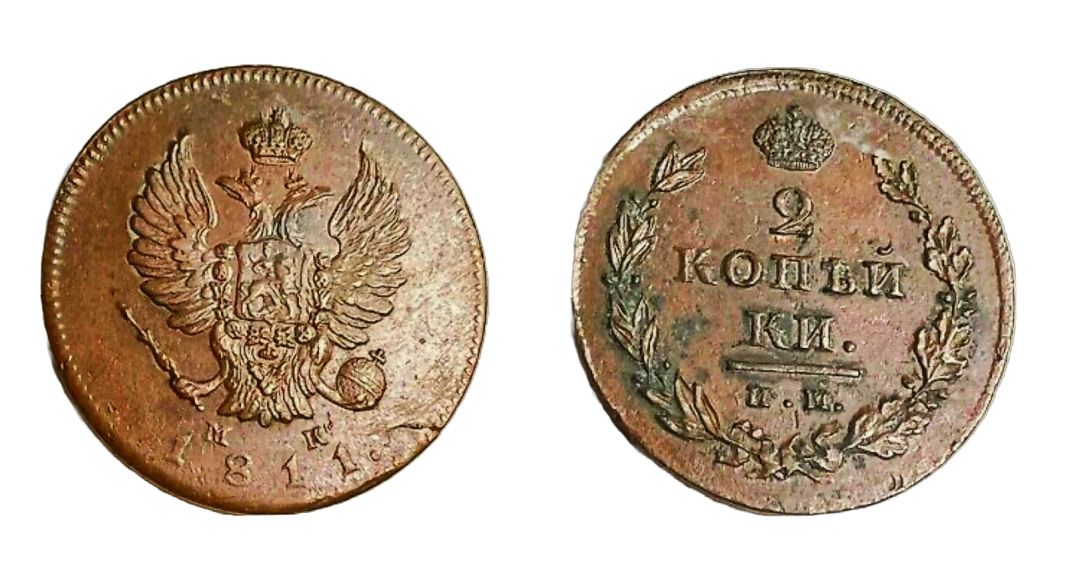
The discovery immediately kicked off a treasure hunting frenzy in Bathurst.
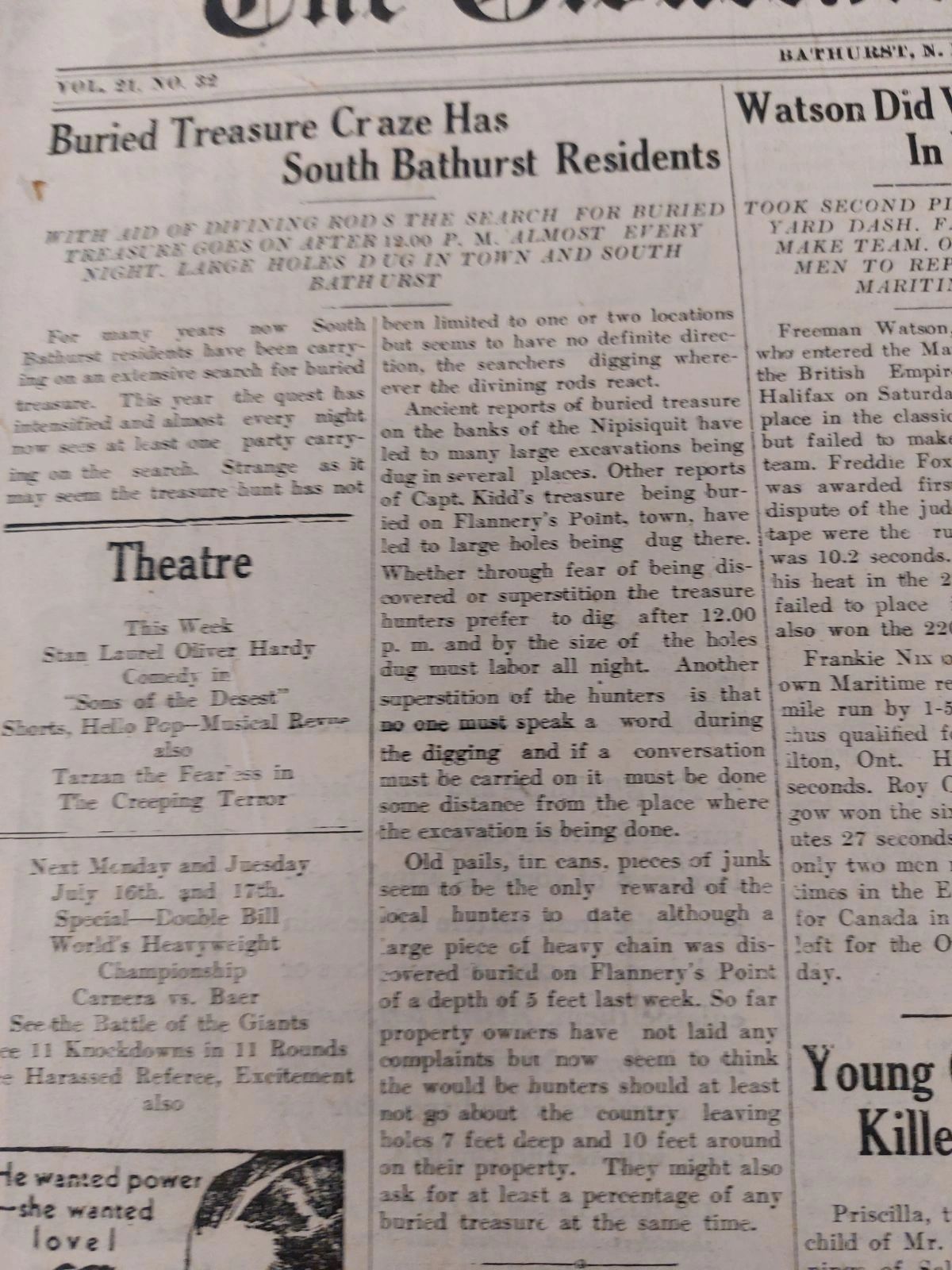
In the wake of the Steever brothers' find, amateur treasure hunters began digging everywhere in and around Bathurst looking to find buried treasure. This immediately became a public nuisance, as people began digging up neighbours property.
The Northern Light reported on the treasure hunting efforts:
“Strange as it may seem, the treasure hunt has not been limited to one or two locations but seems to have no definite direction, the searchers are digging wherever the divining rods detect.”
The Northern Light reported on how the treasure hunters' digging was going:
“Ancient reports of buried treasure on the banks of the Nepisiguit have led to many large excavations being dug in several places. Whether through fear of being discovered or superstition, the treasure hunters prefer to dig after 12:00 pm and by the size of the holes must labour all night. Another superstition of the treasure hunters is that no one must speak a word during the digging and if a conversation must be carried on it must be done some distance from the place where the excavation is being done.”
However, despite all of their remarkable nocturnal efforts, the treasure hunters’ hard work was definitely not paying off for them: “Old pails, tin cans, pieces of junk seems to be the only reward of the local hunters to date, although a large piece of chain was discovered buried on Flannery’s Point of a depth of five feet last week.”
On top of all that, all the digging around Bathurst on random peoples' property was becoming annoying to the people who actually owned that land:
“Property owners seem to think the would be treasure hunters should at least not go about the country leaving holes seven feet deep and ten feet around on their property.”
The Steever Brothers thought they’d found part of Captain Kidd’s buried treasure.
At the risk of breaking a lot of hearts, Captain Kidd never actually came to the Maritimes.
His short career as a pirate was well documented. While he did bury treasure, it was in New York, and it was found almost immediately.
As it turned out, what the Steever Brothers found was definitely not pirate gold at all.
The Northern Light updated readers: “[the] 111 copper pieces [have] been identified as Russian money. The copper coins are valued at two kopecks [of] Russian money and bear the date 1811.”
They were from the Russian Empire, which by 1934 didn’t even exist anymore. Unfortunately for the Steever brothers this meant the coins had no face value.
From there, news about their buried treasure only got worse for them: the coins had been minted from a particular type of soft copper. This meant that they didn’t actually contain any precious metals.
After this discovery, interest in the mysterious Russian treasure faded. As far as I could find, it was never mentioned again in newspapers. It seemed like everyone forgot about it, and even the coins themselves seemed to have disappeared.
Who would have buried one hundred and eleven Russian coins, all of the same type, all from the same year, on a beach by a lighthouse near Bathurst on New Brunswick’s North Shore?
It seems likely that the only person who would bother with dragging 3lbs of kopeks around would have been Russian, because they wouldn’t have had any value elsewhere.
While there seem to have been a couple Russians on the North Shore back then, there were not many. For example a young Jewish refugee from Russia named William Hyman settled in Gaspe in the 1840s and went on to become a wealthy merchant.
A possibility for why they were buried near a landmark like a lighthouse is because the owner wanted to come back for them. This meant they may have intended to use them again in the only place that would accept them – Russia.
This wouldn’t fit William Hyman; he certainly had no intention of going back to Russia where Jewish people were persecuted.
It may have fit the profile of some workers who toiled in the logging camps of Northern New Brunswick, though. The camps were rather indiscriminate about who they hired, as long as they did their jobs.
This may have been an opportunity for a Russian who wanted to make some money and go back home. It would make some sense to hide ones own valuables before heading off to the woods for months straight, like perhaps burying the coins.
It was hard, grueling, and dangerous work in the logging camps. Perhaps the person who buried the coins was killed in one of the many logging accidents in the woods of Northern New Brunswick, and died surrounded by strangers who could not speak their language, and their families and loved ones never found out what happened to them.
Or perhaps the story had a much happier ending: maybe, like William Hyman, they became so wealthy and prosperous that they had no need for such a small sum of money anymore.
Perhaps one day we will find out.